

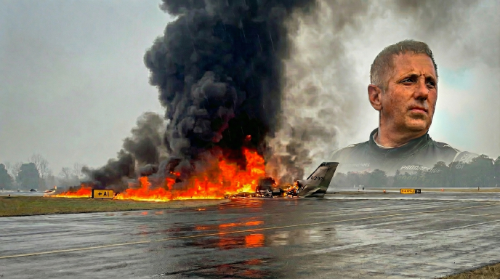

The words people were typing into search bars today were stark and repetitive: “Greg Biffle plane crash,” “Cessna C550,” “Statesville NC,” “is Greg Biffle alive.” By Thursday afternoon, the awful reason behind that flood of queries had come into focus. A Cessna Citation 550 went down while attempting to land at Statesville Regional Airport in North Carolina, and the loss now being mourned is not just an aviation headline. It is a NASCAR story, a North Carolina story, and a brutal reminder of how quickly private grief becomes public fact in the modern news cycle.
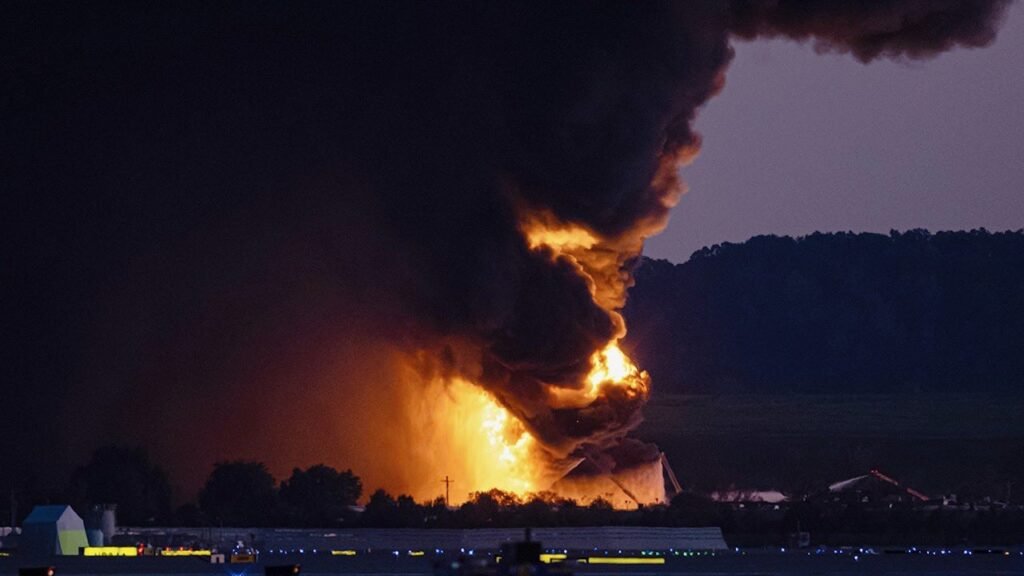
The crash in Statesville and why the Cessna C550 detail matters
The FAA said the aircraft was a Cessna C550 that crashed while landing at Statesville Regional Airport around 10:20 a.m. local time, with six people on board. That single line explains why “Cessna 550” and “C550” rocketed up alongside “NASCAR” in trending searches: this is not a small trainer or a weekend prop plane. A Citation 550 is a business jet, the kind built for speed, distance, and tight schedules, and the kind that can make a regional airport feel like a quiet extension of major-league life.
Statesville is exactly that kind of place. It is a general aviation airport with infrastructure designed to handle corporate traffic, including the kind that moves in and out of the NASCAR ecosystem around Charlotte. The airport’s own description is blunt about its role in that world, serving major companies and NASCAR teams in the region.
If you want to understand why this story spread so fast, look at the geography. Statesville is close enough to the sport’s nerve center that many people in racing know the runway, know the hangars, know the routine. That familiarity makes a crash there feel personal even before names are attached.
Was Greg Biffle on the plane? How the confirmation unfolded
Early coverage moved carefully, and for good reason. Official agencies confirmed fatalities and the fact of six people aboard, while identity information lagged behind the first wave of public speculation. That gap is where rumor thrives.
Then the story shifted from “linked to” to “named.” Rep. Richard Hudson of North Carolina posted a public message mourning Greg Biffle, Cristina, and their children. In a single moment, a search trend became a death announcement, and the tone of the conversation across racing changed from anxious to shattered.
A second, deeply human vector of confirmation came through Garrett Mitchell, better known online as Cleetus McFarland, who wrote that Biffle and his family were on their way to spend the afternoon with him. It was not a press release. It was the kind of raw, immediate statement that carries weight because it is clearly not designed for headlines, yet ends up shaping them anyway.
Even with those statements, the larger truth remains: this is now an active federal investigation, and the final accounting of what happened in the cockpit and on approach will come from investigators, not the internet.
The part people keep missing: this was already a North Carolina story
For many fans, Greg Biffle’s name had re-entered the mainstream NASCAR conversation in recent years for a reason that had nothing to do with checkered flags. He was publicly recognized for his Hurricane Helene response efforts in western North Carolina, a chapter that reframed him from “former champion” into something closer to “local hero” for communities that felt forgotten when roads washed out and help arrived slowly.
NASCAR’s own announcement of his 2024 Myers Brothers Award emphasized that service, positioning his efforts not as a side note, but as a defining piece of what he had become after full-time racing.
That context matters today because it explains why this crash hits with an extra layer of shock. This was not a distant celebrity tragedy. This was a figure many North Carolinians had recently associated with rescue flights, supply runs, and the kind of hands-on help that is rare for anyone with fame, let alone a motorsports résumé.
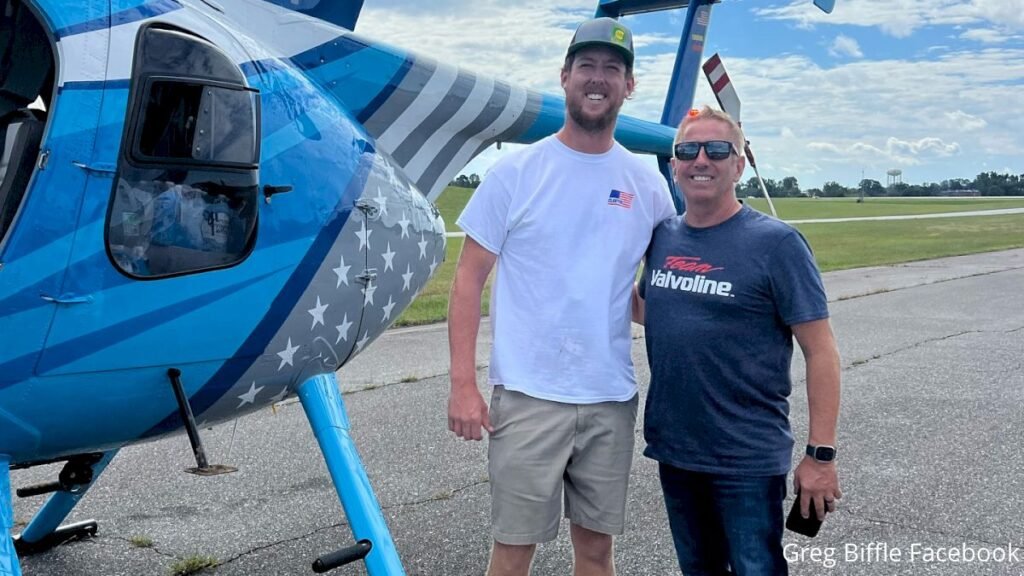
Who Greg Biffle was to NASCAR, in the simplest honest terms
The search phrase “who is Greg Biffle” spiked because a portion of the internet encountered his name through tragedy first, legacy second. In racing terms, Biffle’s legacy was sturdy and specific: a champion in NASCAR’s national ladder, a driver who won at the sport’s top level, and a long-time presence in the era when Roush cars were weekly threats and consistency was a weapon.
The numbers are part of it, but not the full story. Biffle represented a kind of NASCAR career that has become harder to replicate: methodical rise, sustained tenure, and an identity fans could latch onto. He was “The Biff” before branding became mandatory.
And then there is the family dimension that has driven much of today’s search behavior. The names being repeated across posts and headlines, Cristina, Emma, Ryder, are not “details.” They are the point. They are why even people who never watched a lap of NASCAR have been pulled into the emotional gravity of this news.
The investigation and the uncomfortable questions that follow every crash
Right now, there is only a limited set of facts that can be stated cleanly: the aircraft type, the location, the time window, the onboard count, and the reality of fatalities. Beyond that, everything becomes scenario, and scenarios can be cruel.
What investigators will likely focus on is not internet lore about fog, or armchair readings of flight paths, but the fundamentals: aircraft performance, maintenance history, crew decision-making, runway environment, weather conditions at the time of approach, and whether an attempted return created a time-pressure chain of choices.
The FAA has already placed the crash into the formal framework that triggers a full investigative response, and the NTSB is leading the process that follows.
In a moment like this, the most respectful thing the public can do is resist the urge to solve it instantly. The need to know is real, but so is the cost of being wrong.
Why “Cleetus McFarland” became part of the story
It is unusual, but increasingly common, that a major public tragedy becomes intertwined with creators and influencers, not because they are chasing attention, but because their real lives overlap with public figures. Mitchell’s statement did not read like content. It read like a friend realizing he has just become a messenger to millions.
That overlap is why you saw the keyword clusters merge: “Greg Biffle plane crash” next to “Cleetus McFarland,” “Garrett Mitchell,” and “was Greg Biffle on the plane.” In 2025, proximity to a story can matter as much as professional credentials in the first hours of public understanding.
The uncomfortable truth is that social platforms now function as both witness stand and town square, even when the subject is death.
The heartbreak behind the search terms
A trend list can look cold: “greg biffle dead,” “did greg biffle die,” “biffle plane crash today.” But each of those phrases is a person trying to process something they do not want to be true.
When tragedy hits a recognizable name, the internet does what it always does. It hunts for certainty. It refreshes pages. It asks the same question ten different ways because saying it differently feels like it might change the answer.
It does not.


[…] Greg Biffle Plane Crash: What We Know About the Cessna C550 Tragedy in Statesville, NC […]